Foundations
Media planning for Glasgow and Edinburgh: STV and Scottish press
Media planning in Glasgow and Edinburgh: STV airtime, Scottish press titles, the audience currencies behind them and how to choose a media-buying agency.
What to take away
- Media planning across Glasgow and Edinburgh starts from two different audience jobs.
- STV airtime buys Scotland-wide, but daypart performance varies between Glasgow and Edinburgh.
- Scottish press titles reach different readers in each city.
- Scottish radio planning runs on RAJAR data, which measures station reach by survey rather than by set-top box.
- Financial services audiences concentrate in Edinburgh; tourism audiences peak in both cities at different times.
- Agencies should be compared on trading route and city-level reporting, not on size alone.
How Glasgow and Edinburgh advertisers differ
Glasgow is Scotland's largest media market. It carries the bigger mass-market audience, the daily titles with the widest reach and the strongest regional radio franchises. Advertisers here buy scale: reach, frequency and price per thousand across a broad audience.
Glasgow vs Edinburgh planning
Glasgow
- Audience
- Mass market
- Sector focus
- Retail broadcast
- Budget style
- Scale volume
- Media job
- Reach frequency
- Planning fix
- Split weights
Edinburgh
- Audience
- Professional affluent
- Sector focus
- Finance tourism
- Budget style
- Targeted precision
- Media job
- Context precision
- Planning fix
- Split creative
Edinburgh carries a different mix. Financial services, public sector and tourism advertisers dominate, and the independent agency community is growing. Budgets are often smaller but more targeted, and the audience skews towards professional and affluent readers.
That difference shapes media planning from the first brief. A Glasgow campaign for a retailer or a broadcaster wants volume. An Edinburgh campaign for a bank, an insurer or a visitor attraction wants precision and context.
The two cities also sit inside a devolved policy environment that affects public sector and cultural campaigns. Campaigns funded by the Scottish Government or its agencies follow the National Performance Framework and the Programme for Government, with priorities set out in Scottish Government policies, which can determine timing and message.
For planners, the practical consequence is that a single Scottish schedule usually under-delivers in one city. The fix is not to double the budget but to split weights and creative by city.
Using STV across both cities
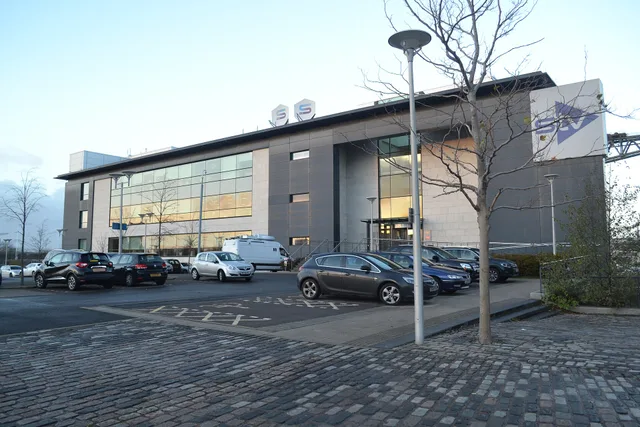
STV is the main commercial broadcaster in Scotland, and STV airtime is the backbone of most Scottish television plans. It sells Scotland-wide, which makes it efficient for national campaigns that need Scottish coverage.
STV city split checklist
- Ask for Glasgow and Edinburgh split
- Check reach and frequency by city
- Review daytime performance by city
- Review early peak by city
- Review late peak by city
- Check sponsorship and digital inventory
The catch is that a Scotland-wide buy does not weight Glasgow and Edinburgh equally. Programming, peak times and audience composition vary, so the same spot can perform differently in each city.
Glasgow and Edinburgh both sit inside STV Central, so there is no standard Glasgow versus Edinburgh sales split. Buyers can request post-campaign delivery by city from BARB, which shows how early peak (18:00 to 22:30) and late peak (22:30 to 00:00) performed in each market.
STV also sells sponsorship and digital inventory around its programming. Those placements can extend a linear buy into on-demand viewing, which matters for younger audiences who watch less live television.
Airtime, sponsorship and the digital inventory around STV programming are sold by the broadcaster itself rather than through a separate Scottish sales house, so the rate card, the daypart definitions and any sponsorship packages come from the same commercial team. Ask for the trading terms and for city-level post-campaign delivery to be part of the same agreement.
Television should not carry the whole plan. See this guide to channel strategy.
Scottish press titles in Glasgow and Edinburgh
Scottish press titles divide along city lines. Glasgow is home to the Daily Record and the Evening Times. Edinburgh is home to The Scotsman and the Edinburgh Evening News, while The Herald is published in Glasgow and sells across Scotland.
Scottish press by city
Glasgow titles
- Reach
- Mass daily
- Reader
- Local news habit
- Best for
- Retail consumer
- Extra depth
- Weekly local
Edinburgh titles
- Reach
- Business politics
- Reader
- Decision influencers
- Best for
- Financial services
- Extra depth
- Weekly local
The Daily Record and Evening Times deliver mass reach in Glasgow. The Scotsman and Edinburgh Evening News reach business, politics and public sector readers in Edinburgh, while The Herald carries weight across both cities.
For financial services advertisers, The Scotsman and Edinburgh Evening News are often the better context buy. For retail and consumer campaigns, the Daily Record and Evening Times usually carry the reach. Many planners use both, with different weights.
Press buying in Scotland also includes weekly and local titles, which can add depth in specific communities. These are useful for public sector campaigns and for tourism businesses targeting visitors from within Scotland.
Press audience data in the UK runs on three currencies: ABC audits print circulation, PAMCo measures the audience of published media, and JICREG estimates regional press readership for local and Scottish titles. The Glasgow and Edinburgh titles are published by Reach (Daily Record), Newsquest (The Herald and the Glasgow Times, formerly the Evening Times) and National World (The Scotsman and Edinburgh Evening News). Building a defensible schedule means checking that data against the brief: the audience research process starts with buyer interviews and channel currencies.
Radio planning for Scottish audiences
Scottish radio planning depends on RAJAR, the joint industry currency for radio audiences. RAJAR collects listening data through a diary survey rather than passive meters, so planners should read the published methodology before quoting figures: it sets out the sample, the survey periods and how station-level reach is defined.
Radio in Scotland splits into national stations, Scottish stations and local franchises. Glasgow and Edinburgh each have strong local stations with loyal audiences, plus national services that cover both cities.
In Glasgow, Clyde 1 and Capital Scotland carry strong local reach. In Edinburgh, Forth 1 and Heart Scotland do the same, while BBC Radio Scotland covers both cities. Use the latest RAJAR survey period, for example Q2 2024 (April to June), and compare station-level data.
Radio also works well alongside press and television for frequency.
Planners should ask for RAJAR data by station and by survey period, and should not compare radio reach directly with television reach. The measurement methods differ, and the numbers are not interchangeable.
Financial services and tourism audiences
Financial services audiences cluster in Edinburgh, where the sector employs a large share of the professional workforce. Campaigns for banks, insurers, investment firms and pension providers often target this audience through Edinburgh press, business titles and targeted digital placements.
These audiences are also subject to strict advertising rules under the CAP Code, enforced by the Advertising Standards Authority. Financial promotions must be fair, clear and not misleading, which affects creative as much as media choice.
Tourism audiences behave differently. Glasgow and Edinburgh both attract visitors, but Edinburgh draws more international and cultural tourism, while Glasgow draws more event, music and city-break tourism. Campaign timing follows those patterns.
Tourism advertising in Scotland also connects to the Culture Strategy for Scotland, which shapes funding and promotion for many attractions: arts, culture and heritage policy sets out the devolved framework.
For both sectors, planners should separate resident audiences from visitor audiences. A campaign aimed at Edinburgh residents reads differently from one aimed at people planning a trip to Scotland.
Choosing a media-buying agency for a Scottish plan
A split Scottish schedule is only as good as the team buying it. When comparing media-buying agencies for Glasgow and Edinburgh work, check four things before you brief.
First, ask whether the agency buys STV airtime directly and can show city-level post-campaign delivery from BARB, rather than a Scotland-wide total alone. Second, check that press buying is planned on ABC, PAMCo and JICREG data for the named titles. Third, confirm that radio planning sits on RAJAR station data for the relevant survey period. Fourth, ask who handles compliance for regulated sectors such as financial promotions.
Size matters less than trading route and reporting. A network agency may bring volume rates on STV and national press; an independent or specialist agency may bring closer attention to one city and one sector. The brief should state the city split, the dayparts, the titles and the currency for each channel, and the agency should report back in the same terms.
Building one Scottish plan across two cities
The practical task is to build one plan that respects two markets. Start with the audience, then choose media that fit each city.
Build one Scottish plan
- Define audience by city and sector
- Set separate reach and frequency targets
- Allocate STV airtime with city split
- Choose press titles by city weights
- Add radio using RAJAR data
- Check sector rules and benchmarks
Building one Scottish plan
- Define the audience by city and by sector, using Scottish statistics and research where available: official Scottish statistics provides the data.
- Set separate reach and frequency targets for Glasgow and Edinburgh.
- Allocate STV airtime across dayparts that match each city's viewing.
- Choose Scottish press titles by city, with weights that match the audience job.
- Add radio for frequency, using RAJAR data by station and survey period.
- Check the plan against sector rules, especially for financial promotions.
- Agree how performance will be judged before launch, using named sources rather than assumed averages; this guide to media buying benchmarks explains why.
The table below shows how a simple split might look for a campaign with a national Scottish footprint but different city priorities.
Building one Scottish plan
Glasgow weight
- STV airtime
- Higher
- Scottish press
- Mass daily titles
- Radio
- Local stations
- Digital
- Broad targeting
Edinburgh weight
- STV airtime
- Lower
- Scottish press
- Business and local titles
- Radio
- National and local mix
- Digital
- Professional targeting
Reason
- STV airtime
- Mass reach in the larger market
- Scottish press
- Different reader jobs
- Radio
- Reach and frequency
- Digital
- Audience skew
A worked example makes this concrete. Suppose a tourism body has a budget to promote a new visitor route across both cities. It could put 55 per cent of television spend into Glasgow and 45 per cent into Edinburgh. It could run press in both cities with a business angle in Edinburgh, and use radio in Glasgow for frequency.
The plan would then be judged on city-level reach.
Checklist before sign-off:
- City-level reach and frequency for STV airtime
- Scottish press titles selected for their city roles
- Press audience checked against ABC, PAMCo and JICREG data
- Radio plan based on RAJAR data by station and survey period
- Financial services creative checked against the CAP Code
- Tourism timing matched to visitor patterns in each city
- Agency able to report city-level STV delivery from BARB
- Measurement agreed with named sources and currencies